
 By
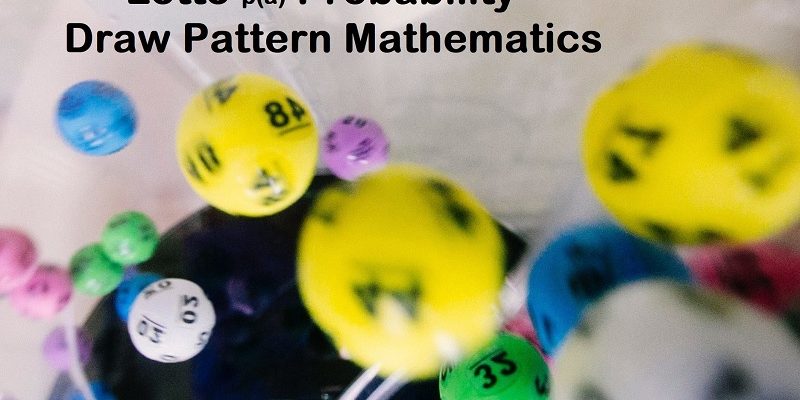
Millions of people purchase lottery tickets every week, exchanging a few dollars for a slip of paper that represents a life-altering dream. The appeal is universal and immediate. With a single draw, a person can theoretically bypass decades of labor, financial planning, and economic struggle. However, beneath the bright studio lights, the tumbling ping-pong balls, and the massive billboards advertising astronomical jackpots, the traditional lottery is an institution built entirely on a foundation of cold, unyielding mathematics.
While the average player relies on luck, superstition, or a fleeting gut feeling, the organizations running these games rely on the immutable laws of probability. Understanding the mathematical principles that govern traditional lottery draws not only demystifies the process but also provides a stark, fascinating look at how human psychology interacts with absolute randomness. By stripping away the emotional allure and examining the underlying mechanics, we can see exactly why the house always wins and why those jackpot odds are engineered to be so profoundly difficult to beat.
The Mechanics of Combinatorics and Large Numbers
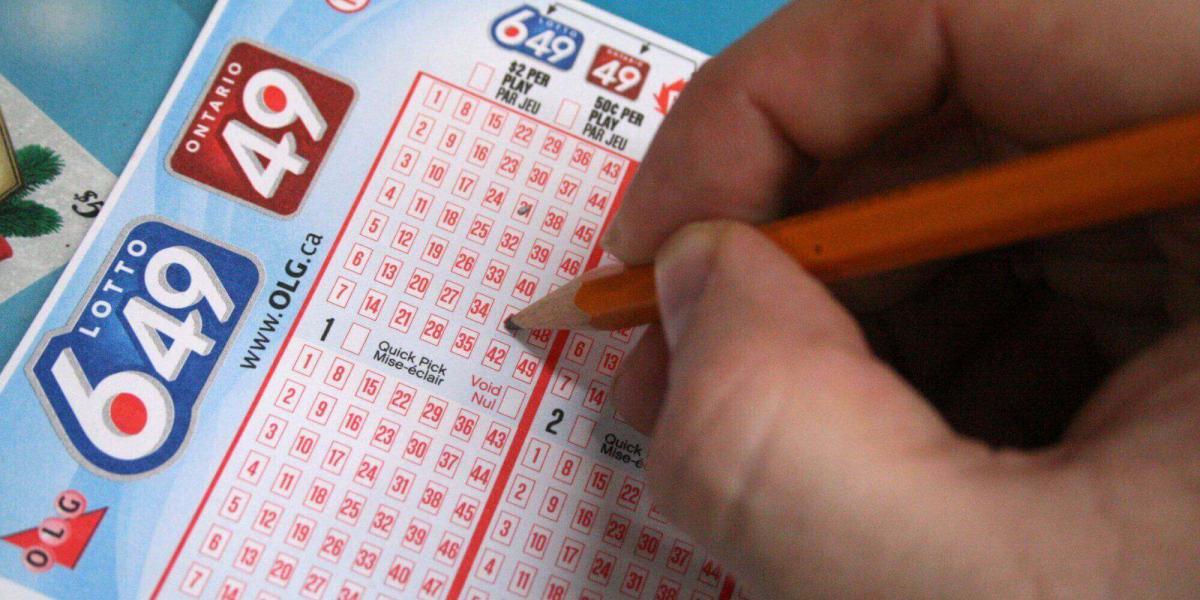
At the core of every traditional lottery draw is a branch of mathematics known as combinatorics, which is the study of counting, arranging, and combining sets of elements. When you buy a ticket for a standard game, such as a classic six-number draw out of forty-nine possible numbers, you are participating in a massive combinatorial exercise. The math dictates exactly how many unique combinations can be generated from that specific pool of numbers.
To calculate the total number of possible combinations, mathematicians use a specific formula that accounts for the fact that the order in which the numbers are drawn does not matter. If you pick the numbers one through six, it makes no difference if the machine draws a six first and a one last; the ticket is still a winner. In a standard 6/49 lottery, the combinatorial math reveals that there are just under fourteen million unique combinations. This means that any single ticket you purchase has a one in fourteen million chance of matching the drawn numbers perfectly.
When we look at modern multi-state lotteries, the combinatorial math becomes even more staggering. These games add a secondary pool of numbers—the bonus ball—which acts as a multiplier to the base odds. By requiring players to correctly guess five numbers from a large pool and one additional number from a smaller, separate pool, the total possible combinations skyrocket into the hundreds of millions. The odds of winning a modern mega-jackpot often hover around one in three hundred million. To put that into perspective, you are mathematically far more likely to be struck by lightning, bitten by a shark, or drafted into a professional sports league than you are to hold the winning ticket. The lottery operators design these games with these exact astronomical odds in mind to ensure that jackpots roll over week after week, generating massive media headlines and driving up ticket sales across the country.
The Gambler’s Fallacy and the Illusion of Control
One of the most persistent misunderstandings among lottery players is the concept of past performance influencing future results. Human brains are hardwired to seek out patterns. It is an evolutionary survival mechanism that served us incredibly well in the wild, but it completely betrays us when we face absolute mathematical randomness. This cognitive bias leads directly to a dangerous trap that statisticians call the Gambler’s Fallacy.
The Gambler’s Fallacy is the incorrect belief that if a particular event occurs more frequently than normal during a given period, it will happen less frequently in the future, or vice versa. In the context of a lottery, every single draw is a strictly independent event. The tumbling balls inside the machine have no memory of what happened last week, last month, or last year. If the number seven is drawn three weeks in a row, the probability of the number seven being drawn on the fourth week remains exactly the same as it was on the first week.
The Myth of Hot and Cold Numbers
Many players and commercial lottery prediction software rely heavily on the idea of “hot” and “cold” numbers. They analyze historical draw data to find numbers that have appeared frequently and those that have been absent for long stretches. The mathematical truth is that tracking this historical data offers absolutely no predictive value for a completely random draw.
Over an infinite timeline, the law of large numbers dictates that every ball will be drawn an equal number of times. However, in the short term, variance guarantees that clusters and gaps will naturally occur. Buying a ticket based on a “cold” number because you feel it is mathematically “due” is a fundamental misunderstanding of probability. The draw machine operates in a state of perpetual reset, making all historical data mathematically irrelevant to the immediate outcome.
Expected Value and the True Cost of a Ticket
To truly evaluate the mathematical reality of a lottery ticket, financial analysts look at a metric called Expected Value. Expected Value is the predicted value of an investment at some point in the future, calculated by multiplying each possible outcome by the probability of that outcome occurring, and then summing all those values. In almost all forms of gambling, including traditional state and national lotteries, the Expected Value is heavily negative.
When you purchase a two-dollar lottery ticket, the mathematical Expected Value of that ticket is typically around fifty to sixty cents. This means that for every dollar you spend, you are mathematically guaranteed to lose a significant percentage over the long run. The remaining percentage is how the lottery corporations generate billions of dollars in revenue without ever taking on any real financial risk. The game is meticulously engineered so that the house payout is always substantially lower than the true odds of winning.
The Anomaly of Positive Expected Value
There is a fascinating mathematical anomaly that occasionally occurs when a jackpot rolls over repeatedly and reaches a massive, historic sum. If the jackpot grows large enough, the Expected Value of a two-dollar ticket can technically rise above two dollars, creating a rare scenario with a positive Expected Value. During these events, purchasing a ticket is mathematically sound in a vacuum.
However, this calculation ignores the vital concept of shared jackpots. When jackpots reach record-breaking sizes, ticket sales surge exponentially. This massive influx of players dramatically increases the likelihood that multiple people will select the winning combination, forcing them to split the grand prize. Once you factor in the high probability of a split pot, alongside the immediate reduction of the prize due to lump-sum penalties and heavy taxation, the Expected Value almost always crashes right back down into negative territory.
Strategic Number Selection and Payout Optimization
Since you cannot alter the fundamental mathematics of the draw to improve your odds of winning, you might wonder if there is any strategic element to playing the lottery at all. From a purely probabilistic standpoint, you cannot make a winning ticket more likely. A ticket with the numbers one, two, three, four, five, and six has the exact same probability of winning as a ticket with a completely randomized assortment of high and low numbers. The physics of the draw machine do not recognize aesthetic patterns or sequential numbers.
However, mathematics can be used to optimize your potential payout in the highly unlikely event that you do win. Because human beings are remarkably predictable in their random number selections, they tend to heavily favor certain patterns. A vast majority of players select their numbers based on significant calendar dates, such as birthdays or anniversaries. This means that numbers from one to thirty-one are chosen at a disproportionately high rate across the playing public. If a winning draw consists entirely of numbers under thirty-two, it is highly likely that dozens of people will have selected that exact combination, resulting in a heavily diluted payout for everyone involved.
To maximize your potential payout, mathematical logic dictates selecting numbers above thirty-one. While doing so does not increase your chances of winning the jackpot by even a fraction of a percent, it significantly decreases the probability that you will have to share the prize with a large group of other winners if your specific combination actually hits. Similarly, utilizing a machine-generated quick pick ensures a truly random selection, entirely bypassing the predictable cognitive biases that plague manual number selection.
Fostering a Healthier Relationship with the Game
The traditional lottery is a masterpiece of mathematical design, perfectly balanced to offer life-changing hope to the individual while guaranteeing absolute, predictable profitability for the operator. The combination of astronomical odds, independent events, and negative expected value ensures that the lottery can never be a viable financial strategy or an alternative to personal savings.
Yet, understanding the rigorous math behind the tumbling balls does not necessarily mean one must stop playing altogether. When you accept the reality of the probability, purchasing a ticket transitions from a desperate financial gamble into a simple, inexpensive purchase of a momentary dream. The math clearly dictates that you will almost certainly never hold the winning ticket. However, recognizing the absolute randomness of the game allows you to enjoy the brief thrill of possibility with clear eyes, grounded expectations, and a firm grasp on reality.






Comments