
 By
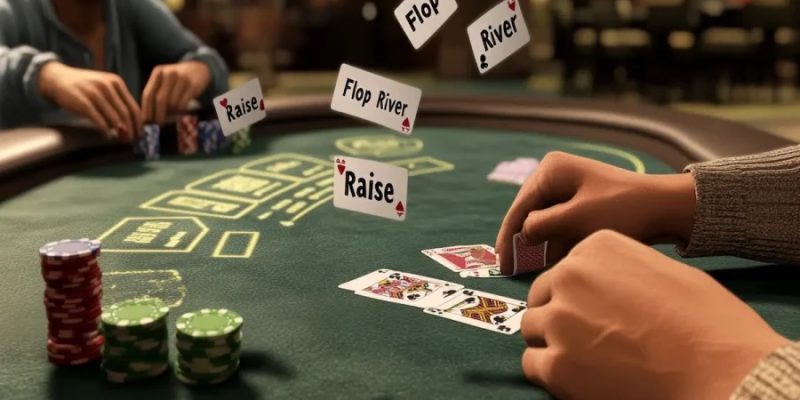
Stepping into a poker room, whether physical or digital, can often feel like arriving in a foreign country without a phrasebook. The game is steeped in a rich, highly specific dialect that has evolved over decades of backroom games and casino tournaments. For a novice, sitting at a table where players are casually tossing around terms like “three-betting from the cutoff” or “chasing a gutshot on the turn” is incredibly intimidating. It can make you feel as though everyone else is playing a completely different game.
However, mastering poker terminology is about far more than just sounding like you belong at the table. The vocabulary of poker is intrinsically tied to its strategy. When you understand the words, you begin to understand the flow of information, the mathematical probabilities at play, and the psychological warfare happening beneath the surface. To truly grasp the mechanics of the game and accelerate your learning curve, you must first become fluent in its language.
The Foundation of the Game
Before any cards are dealt, the structure of the game must be established. These terms define how a hand begins and how the mandatory money is placed into the pot to ensure there is always something worth fighting for.
The Dealer Button Often simply called “the button,” this is a plastic disc that moves one seat to the left after every hand. It represents the nominal dealer for that specific round. More importantly, the button determines the order of betting. The player holding the button is generally the last to act in most betting rounds, which provides a massive strategic advantage. They get to see what everyone else decides to do before making their own choice.
The Blinds To ensure the game has action, two players are forced to put money into the pot before they even look at their cards. These forced bets are called blinds because you are betting blind. The player immediately to the left of the button posts the small blind, and the player to their direct left posts the big blind. The big blind is usually double the size of the small blind and represents the minimum bet required to enter the hand.
Antes In addition to blinds, many tournaments and some cash games require an ante. This is a small, mandatory contribution to the pot made by every single player at the table before the hand begins. Antes serve to inflate the starting pot, encouraging players to play more aggressively rather than just waiting patiently for premium cards.
The Anatomy of a Hand
Once the foundational money is in the middle, the actual gameplay commences. A standard hand of Texas Hold’em—the most popular variant of the game—is broken down into very specific streets, or phases, of play.
Hole Cards These are the private cards dealt face down to each player. In Texas Hold’em, you receive two hole cards. These belong exclusively to you, and your entire strategy is based on how well your hole cards connect with the community cards that will be dealt later.
Pre-Flop This is the very first betting round. It occurs immediately after all players have received their hole cards, but before any community cards are placed on the table. The action begins with the player sitting to the direct left of the big blind, and players must decide if their two private cards are strong enough to pay the price of admission.
The Flop After the pre-flop betting round concludes, the dealer places three community cards face up in the center of the table. This is the flop. These cards are shared by everyone at the table to build their best five-card hand. The flop is the most critical juncture in a poker hand because it defines the texture of the board and usually dictates whether your hole cards have genuine potential.
The Turn Also known in older poker circles as “fourth street,” the turn is the single community card dealt face up after the post-flop betting round concludes. It adds a fourth shared card to the board, often changing the dynamic of the hand entirely by completing potential straights or flushes.
The River This is the fifth and final community card dealt to the board. Affectionately known as “fifth street,” the river is where all the potential of a hand is fully realized or completely destroyed. Once the river is dealt, there are no more cards to come, leading to the final and often most aggressive betting round.
Showdown and Mucking If more than one player remains in the hand after the final betting round on the river, the hand proceeds to a showdown. Players must turn their hole cards face up to determine who holds the best five-card combination. If a player sees they have been beaten and does not want to reveal their losing cards to the table, they can choose to muck their hand, which means sliding their cards face down toward the dealer, conceding the pot without exposing their strategy.
Navigating the Betting Rounds
Knowing the phases of the board is only half the battle. You must also understand the precise verbs used to move money around the table. Using the correct terminology here prevents costly misunderstandings with the dealer.
Check If it is your turn to act and no one before you has placed a bet, you can check. Checking simply means you are passing the action to the next player without putting any additional money into the pot. It is the poker equivalent of saying, “I will stay in the hand, but I do not want to raise the stakes right now.”
Call and Raise If a player before you has placed a bet, you have to match that amount to stay in the hand. This is a call. If you believe your hand is stronger than theirs, or if you want to bluff them into folding, you can raise, which means matching their bet and adding a predetermined amount on top of it.
Three-Bet This is a term you will hear constantly among experienced players. A three-bet is the second raise in a betting round. For example, if the big blind is the first mandatory bet, and Player A raises pre-flop (the second bet), and Player B raises over the top of Player A, Player B has successfully executed a three-bet. It is a sign of immense strength or a highly coordinated bluff.
All-In The most dramatic phrase in the game. Going all-in means you are pushing every single chip you have in front of you into the pot. You are risking your entire tournament life or cash stack on a single hand.
Understanding Table Position
Where you sit in relation to the dealer button dictates your strategy just as much as the cards in your hand. Positional awareness is what separates profitable players from losing ones.
Under the Gun (UTG) This is the seat immediately to the left of the big blind. The player under the gun is the very first person to act before the flop. It is considered the worst position at the table because you have absolutely no information about what the other eight players intend to do. You must play very tight, premium hands from this position.
The Cutoff This is the seat located directly to the right of the dealer button. It is the second-best position at the table. Because you act so late in the betting rounds, you have a wealth of information to work with. Players in the cutoff can play a much wider, more aggressive range of cards.
Reading the Table: Player Archetypes and Behaviors
Poker is a game played against people, not against a casino house. Consequently, a massive subset of the vocabulary is dedicated to categorizing the people sitting around you.
Fish and Sharks A fish is a derogatory but common term for a weak, inexperienced player who frequently makes mathematical errors, chases bad draws, and plays too many hands. Conversely, a shark is a highly skilled, predatory player who actively seeks out tables populated by fish in order to extract their money efficiently.
Nits and Calling Stations A nit is a player who is overly tight. They are terrified of losing chips and will only enter a pot if they hold absolute monster cards like pocket aces or kings. Because they are so predictable, they are easy to bluff. A calling station is the exact opposite; it is a player who simply cannot find the fold button. They will call your bets with incredibly weak hands, hoping to get lucky. You should never bluff a calling station; you simply wait until you have a strong hand and bet heavily for value.
Going on Tilt This is perhaps the most important psychological term in gambling. A player goes on tilt when they allow their emotions to hijack their logic. Usually triggered by a bad loss, a tilting player becomes frustrated, angry, and reckless. They start playing weak hands aggressively, trying to force the game to give them their money back. Recognizing when you are on tilt—and stepping away from the table when it happens—will save your bankroll.
Defining Your Hand and Your Luck
Finally, you need the vocabulary to describe the cards you hold and the mathematical reality of your situation.
The Nuts Holding the nuts means you currently possess the absolute best possible hand given the community cards on the board. It is a mathematically unbeatable hand. If the board shows three hearts, and you hold the ace and king of hearts in your hand, you hold the nut flush.
Bad Beat A bad beat occurs when a player gets their money into the pot with a massive mathematical advantage, only for the opponent to hit an incredibly lucky card on the turn or river to win. It is the most frustrating experience in poker, but understanding that it is just a product of statistical variance is key to surviving the game mentally.
Pot Odds This is the mathematical foundation of profitable poker. Pot odds refer to the ratio between the current size of the pot and the cost of the bet you are facing. If there is one hundred dollars in the pot, and your opponent bets twenty-five dollars, you are getting four-to-one pot odds on a call. You use this ratio to determine if mathematically chasing a winning card is actually worth the financial risk.
By familiarizing yourself with this terminology, you strip away the intimidation factor of the game. The table transforms from a chaotic mix of slang and flying chips into a structured, highly strategic environment. You will be able to follow the action, categorize your opponents, and ultimately make decisions grounded in logic rather than confusion.






Comments