
 By
By 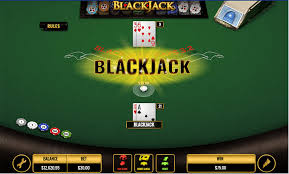
Introduction
Online blackjack is more than a digital version of a casino classic—it’s a complex ecosystem designed with economic precision. Every aspect of the interface, from payout ratios to session flow, is carefully engineered to influence how players behave and how long they stay engaged. Beneath the surface of familiar cards and chips lies a sophisticated interplay of behavioral economics, algorithmic optimization, and cognitive design, all strategically aligned to shape user decisions. Understanding these hidden mechanics reveals why certain platforms thrive and how the “house edge” extends far beyond statistical probability.
The Evolution from Probability to Psychology
Traditional blackjack relied purely on mathematics—the odds of drawing a particular card, the impact of dealer rules, or the influence of deck count. However, the online transformation introduced psychological triggers into the design. Game developers realized that beyond probability, human perception of risk, reward, and loss could be manipulated to sustain engagement.
For instance, the digital interface allows platforms to control pacing, reward frequency, and visual reinforcement. A near-win animation or rapid re-deal subtly encourages continued play even after losses. These cues borrow directly from behavioral economics principles such as loss aversion and variable reinforcement schedules, which are known to condition persistence in risk-taking environments.
The Economic Framework Behind Blackjack Platforms
Online blackjack sites operate on a sophisticated economic model designed to maximize player lifetime value (LTV) rather than immediate profit from a single session. To achieve this, developers employ three core mechanisms:
-
RTP (Return to Player) Manipulation
Although the game advertises a specific RTP percentage (often between 98%–99%), micro-adjustments in game flow—like dealer reshuffles, card distribution timing, and payout rounding—can subtly shift the real-world return. Even small changes in effective RTP create cumulative advantages over thousands of hands. -
Bet Structuring and Psychological Anchoring
Many interfaces highlight certain bet sizes visually—often defaulting to moderate wagers that appear safe yet are statistically optimal for the house edge. By anchoring user attention on these bet amounts, casinos guide player risk profiles while appearing neutral. -
Dynamic Bonus Incentives
Promotional offers, loyalty bonuses, and loss rebates are not generosity—they’re retention tools modeled on behavioral spending psychology. They re-engage dormant players or motivate higher-risk betting under the guise of “value-added” rewards.
User Interface (UI) Design as Economic Engineering
Every pixel of a blackjack table serves a purpose. Interface design teams apply UX economics—the study of how layout influences decision-making—to reinforce profitable behaviors. Examples include:
-
Color Psychology: Green backgrounds, associated with calmness and trust, increase comfort and session duration.
-
Button Placement: The “Rebet” or “Double” buttons are often positioned for instant access, reducing cognitive delay and encouraging rapid wagering.
-
Micro-Animations: Subtle card flips, chip sounds, and dealer gestures emulate real-world cues of success, triggering dopamine responses linked to anticipation and excitement.
-
Loss Camouflage: Visual transitions between hands soften the impact of losses by speeding up deal animations or adding “near-win” effects that trick the brain into perceiving progress.
These design tactics aren’t random aesthetics—they’re economic instruments that translate psychological engagement into measurable revenue growth.
How Game Rules Reinforce Profitability
While player perception focuses on cards and strategy, the rule variations introduced by platforms are often economically motivated. Even small rule deviations can shift profitability dramatically. Consider the following subtle adjustments:
-
Payout Ratio Adjustments: Changing blackjack payouts from 3:2 to 6:5 increases the house edge by over 1.3%, yet most players accept it due to convenient table labeling.
-
Resplit Restrictions: Limiting re-splitting of aces or doubling after split reduces optimal play opportunities, quietly compounding losses.
-
Continuous Shuffle Machines (CSMs): Online equivalents of CSMs eliminate deck penetration advantage, neutralizing card-counting strategies and stabilizing casino margins.
By introducing these rule shifts under the guise of “game variety,” platforms align structure with profit predictability while maintaining user engagement through novelty.
The Behavioral Loop: How Platforms Sustain Play
Online blackjack platforms function as closed behavioral loops, where every outcome influences the next decision. The loop operates through five primary economic triggers:
-
Win-Reinforcement: A win prompts immediate visual and audio feedback—lights, sound effects, and upbeat dealer reactions—to reward the behavior.
-
Loss Normalization: Losses are masked by speed and “try again” cues, reducing their emotional sting.
-
Near-Win Illusion: When a hand narrowly misses 21 or loses by a single card, it triggers persistence rather than withdrawal.
-
Micro-Bonus Reinforcement: Small, frequent bonuses maintain psychological momentum, preventing disengagement.
-
Retention Alerts: Push notifications or “limited-time tables” reinitiate engagement during inactive periods.
Together, these mechanics form what behavioral economists call the engagement economy—a system where user attention and participation are the primary currencies.
Platform Profitability and Player Misperception
The core economic tension in online blackjack lies in information asymmetry. Players believe they are competing purely against mathematical odds, while the platform integrates real-time analytics, tracking average bet sizes, session length, and loss patterns. This data informs algorithmic difficulty tuning and promotion timing.
For example, a player on a losing streak may be offered a “10% cashback bonus” to continue playing, while a high-risk bettor might receive targeted “high roller” incentives to extend exposure. These individualized adjustments allow casinos to optimize retention per user cohort—a model identical to digital advertising economics.
The Regulatory Illusion of Fairness
Regulatory oversight ensures games meet minimum fairness standards, such as certified RNG audits or payout verification. However, these certifications focus on randomization, not behavioral fairness. The economic systems influencing user psychology remain largely unregulated. This loophole enables casinos to employ persuasive interface mechanics and retention strategies under the banner of compliance.
Moreover, some operators use dynamic RTP models—adaptive payout algorithms that statistically normalize returns over large samples while allowing short-term volatility to enhance excitement. The design is mathematically legal yet economically skewed toward engagement maximization.
Ethical Dimensions and Player Awareness
The economics of online blackjack highlight a deeper ethical question: where does entertainment end and engineered addiction begin? Platforms justify their models as “immersive experiences,” but when design choices intentionally obscure loss perception or exploit behavioral bias, they cross into manipulative territory.
To navigate this environment responsibly, expert players must combine mathematical literacy with behavioral insight—understanding not only the probabilities of cards but the profit motives behind every design element they interact with.
Practical Steps for Conscious Play
-
Regularly analyze rule sets before playing; small variations can drastically alter long-term return.
-
Set pre-defined session limits to counter behavioral loop exploitation.
-
Avoid “fast deal” modes designed to accelerate losses per hour.
-
Be skeptical of bonus structures offering incremental rewards—they often anchor higher wagering habits.
Conclusion
Online blackjack has evolved from a test of mathematical skill into an intricate economic ecosystem driven by behavioral science and design psychology. Every visual cue, rule variation, and incentive is part of a carefully orchestrated framework built to sustain engagement and optimize casino revenue. For seasoned players, mastering blackjack today means not only reading the cards but reading the economics of the game itself—because the most significant edge lies in understanding the incentives shaping your every move.
FAQs
1. How do online blackjack platforms make money beyond the house edge?
They rely on extended session times, variable RTP structures, and psychologically tuned incentives that increase average bets and duration per user.
2. Why do payout ratios differ across online blackjack tables?
Slight adjustments in payout ratios (like 6:5 vs. 3:2) are designed to standardize profitability across player demographics while maintaining game variety.
3. What is “dynamic RTP,” and is it fair?
Dynamic RTP adjusts payout probabilities over time to balance platform margins while creating short-term excitement. It’s legal but strategically tilted toward casino profit stability.
4. How do bonuses influence long-term player behavior?
Bonuses use loss recovery framing to encourage continued play; players perceive regained value while statistically increasing exposure.
5. Can players detect if a game manipulates shuffle timing or card distribution?
While RNG audits ensure randomization, subtle timing mechanics and deck management remain opaque—making direct detection difficult.
6. Why do online blackjack interfaces feel faster than live casinos?
Speed is intentionally optimized to increase hands per hour, thus raising casino earnings while maintaining player immersion.
7. What’s the best defense against economic manipulation in online blackjack?
Knowledge—understanding the economics, design psychology, and rule variations reduces the risk of falling into engineered behavioral traps.







Comments